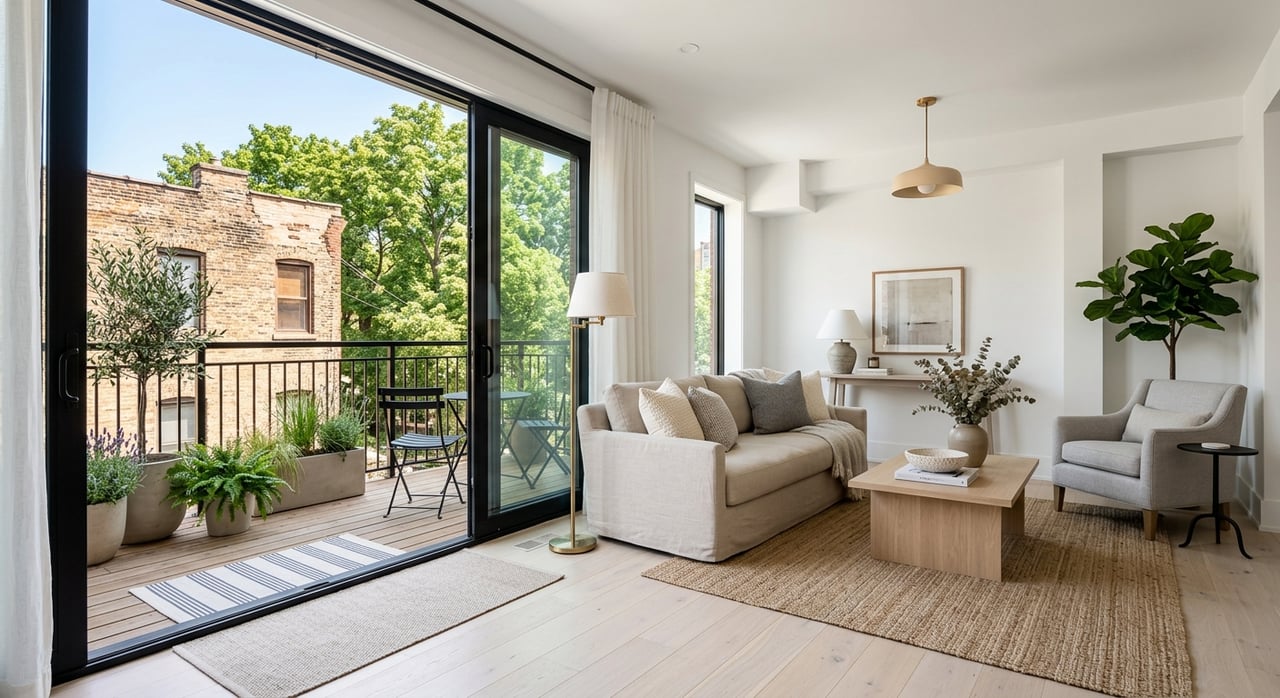
If you love the idea of walking to coffee, dinner, events, and work, condo living in Downtown Raleigh can be a great fit. It also comes with tradeoffs that are easy to miss if you only focus on the listing price. This guide will help you understand what downtown condo life really looks like, what costs to expect, and what to review before you buy. Let’s dive in.
What Downtown Raleigh condo living looks like
Downtown Raleigh condo inventory is fairly limited, which is part of what makes this market feel competitive and distinct. A current market snapshot showed 63 condos for sale in Downtown Raleigh, along with 11 townhouses, a median listing price of $499,000, and a median time on market of 67 days.
That limited inventory means each building can feel very different. Some condos offer a simple lock-and-leave lifestyle with basic common-area upkeep, while others include a more service-heavy experience with amenities like fitness centers, pools, concierge service, clubrooms, rooftop spaces, storage, and gated parking.
If you are thinking about living downtown, that variety is important. The best fit is often less about finding the lowest price and more about matching the building to how you actually live.
Monthly costs matter more than price alone
One of the biggest mistakes buyers make is comparing downtown condos based only on sticker price. In reality, your monthly carrying cost can vary a lot from building to building.
Current listing examples show HOA dues ranging from the high $200s per month to well over $1,500 per month. That gap usually reflects real differences in what the building provides, from modest upkeep to amenities like secure access, covered parking, storage, pools, dog parks, fitness rooms, and concierge service.
Property taxes also play a meaningful role in downtown ownership costs. For properties in Downtown Raleigh, the FY2026 tax rates include Raleigh city tax at 35.50 cents per $100 of assessed value, Wake County tax at 51.71 cents per $100, and the Downtown Raleigh Municipal Service District tax at 6.8 cents per $100.
At the current downtown median listing price of $499,000, that works out to about $4,691 per year in property taxes, or roughly $391 per month before HOA dues, insurance, utilities, and mortgage costs. When you stack those expenses together, a condo that looks affordable at first glance can feel very different in your monthly budget.
What HOA dues can include
HOA dues are not automatically good or bad. What matters is what you are getting in return and whether those services match your priorities.
In Downtown Raleigh, one building may offer little more than exterior maintenance and shared-area care. Another may include parking, water, trash, fitness facilities, pool access, storage, security features, or concierge-style services.
That is why two condos with similar prices can have very different ownership experiences. If you value convenience and use the amenities, a higher-fee building may make sense. If you prefer a simpler setup and do not want to pay for extras, a lower-amenity building may be the better choice.
What North Carolina requires buyers to review
In North Carolina, condos are governed by Chapter 47C, the North Carolina Condominium Act. That law gives structure to how associations operate, including budgets, assessments, meetings, and recordkeeping.
For buyers, one of the most helpful documents is the public offering statement. This disclosure package can tell you a great deal about the financial and practical side of the building before you close.
According to North Carolina law, that statement must disclose items such as the current balance sheet, projected budget, whether the budget includes reserves for repairs and replacement, other reserves, projected assessments, certain closing fees, insurance coverage, and any current or future fees tied to common elements or related facilities.
The association must also keep financial and meeting records reasonably available to owners. It must provide a budget summary within 30 days after adopting the budget, hold a ratification meeting 10 to 60 days later, and provide an annual income and expense statement and balance sheet within 75 days after the close of the fiscal year.
Key condo documents to request
When you are evaluating a downtown condo, it helps to go beyond the marketing brochure and review the actual association paperwork.
A strong due-diligence package should include:
- The public offering statement or resale documents
- The current association budget
- The reserve line item in that budget
- The annual income and expense statement
- The balance sheet
- Any statement showing unpaid assessments
These documents help you compare buildings in a more realistic way. They can also show you whether dues are supporting a healthy operating structure or whether important costs may be pushed into future assessments.
Parking can shape daily life
Parking is one of the most practical parts of downtown condo living, and it should never be assumed. In Downtown Raleigh, parking arrangements can differ widely by building.
Some listings highlight deeded covered parking spaces, assigned parking, or storage tied to the unit. Others may rely more heavily on shared arrangements or nearby public options.
The City of Raleigh says it operates 11,000 downtown parking spaces, including on-street parking and parking decks, and it owns eight parking decks. Metered parking is enforced in the core downtown district, Glenwood South, and the Hillsborough Street corridor, and the city also has a Residential Permit Parking program in designated neighborhood areas.
For you as a buyer, the takeaway is simple: verify the exact parking setup. Ask whether parking is deeded, assigned, or rented, whether guest parking exists, and what happens if you have a second car.
Noise is part of the downtown tradeoff
Downtown living often means energy, convenience, and walkability. It can also mean more noise than you would get in a lower-density setting.
Raleigh updated its noise rules effective January 1, 2026, with changes that apply to amplified sound from commercial establishments such as bars, restaurants, and clubs. The city also notes that general noise concerns that do not require immediate response can be submitted through Ask Raleigh, while urgent issues can go through the non-emergency line.
For condo buyers, the practical lesson is to evaluate each unit carefully. Floor level, unit orientation, window quality, and distance from nightlife corridors can all affect how a condo feels day to day.
Condo or townhome? The legal structure matters
If you are cross-shopping condos and townhomes in Downtown Raleigh, the legal setup matters more than the label on the listing. A property that looks like a townhome may not operate like a condo, and vice versa.
In North Carolina, many townhome communities are organized under Chapter 47F, the North Carolina Planned Community Act, rather than Chapter 47C. That means the association structure, records, budgets, and assessments may follow a different legal framework.
This matters because two properties with a similar look can come with different ownership responsibilities and financial structures. If you are comparing options, ask clearly whether the property is a condominium or part of a planned community.
Features that may support resale appeal
No one can promise future resale results, but some features appear repeatedly in current downtown listings. That repetition gives buyers useful clues about what tends to stand out in the market.
Listings often highlight secure access, deeded parking, multiple parking spaces, storage rooms, rooftop amenities, pools, and fitness spaces. In a downtown setting where parking and storage are limited, those features can make a unit easier to position when it is time to sell.
That does not mean every buyer needs every amenity. It does mean you should think ahead about how your unit compares within its building and within the broader downtown market.
Questions to ask before buying
If you want a simple checklist, start here. These questions can help you compare buildings in a way that goes beyond surface-level impressions.
- What is the exact HOA fee, and what does it include?
- Is parking deeded, assigned, or rented?
- How many guest parking spaces are available?
- Does the current budget include reserves for repairs and replacement?
- Are there annual financial statements and balance sheets available for review?
- Is water, trash, storage, security, or parking included in the dues?
- How close is the building to nightlife, traffic, or other likely noise sources?
- Is the property legally a condominium or a planned community?
These questions can save you from surprises later. They also help you choose a property that fits your actual routine, budget, and long-term plans.
Is downtown condo living right for you?
Downtown Raleigh condo living can be a strong option if you want urban convenience without yard work and you like the idea of a more connected, low-maintenance lifestyle. The key is understanding that not all condos offer the same cost structure, amenities, parking setup, or daily experience.
A smart purchase usually comes from looking at the full picture. When you compare monthly costs, review the association documents, and think carefully about parking, noise, and lifestyle fit, you can make a much more confident decision.
If you are exploring condo living in Downtown Raleigh and want clear, local guidance, Live Raleigh can help you compare buildings, review the real monthly cost, and find the right fit for how you want to live.
FAQs
What is the average price point for condos in Downtown Raleigh?
- A current market snapshot showed a median listing price of $499,000 for Downtown Raleigh condos.
What should you review before buying a condo in Downtown Raleigh?
- You should review the public offering statement or resale documents, the current budget, the reserve line item, the annual income and expense statement, the balance sheet, and any unpaid assessments.
What can HOA fees include in a Downtown Raleigh condo building?
- Depending on the building, HOA dues may cover common-area upkeep, water, trash, parking, storage, secure access, fitness amenities, pools, clubrooms, or concierge-style services.
What are property taxes like for Downtown Raleigh condos?
- Based on FY2026 rates and the current downtown median listing price of $499,000, property taxes work out to about $4,691 per year, or roughly $391 per month, before HOA dues and other ownership costs.
What should you ask about parking at a Downtown Raleigh condo?
- You should ask whether parking is deeded, assigned, or rented, how many spaces come with the unit, and whether guest parking is available.
How do condo and townhome ownership differ in North Carolina?
- In North Carolina, condos are generally governed by Chapter 47C, while many townhome communities are organized under Chapter 47F, which can mean a different legal and financial structure.